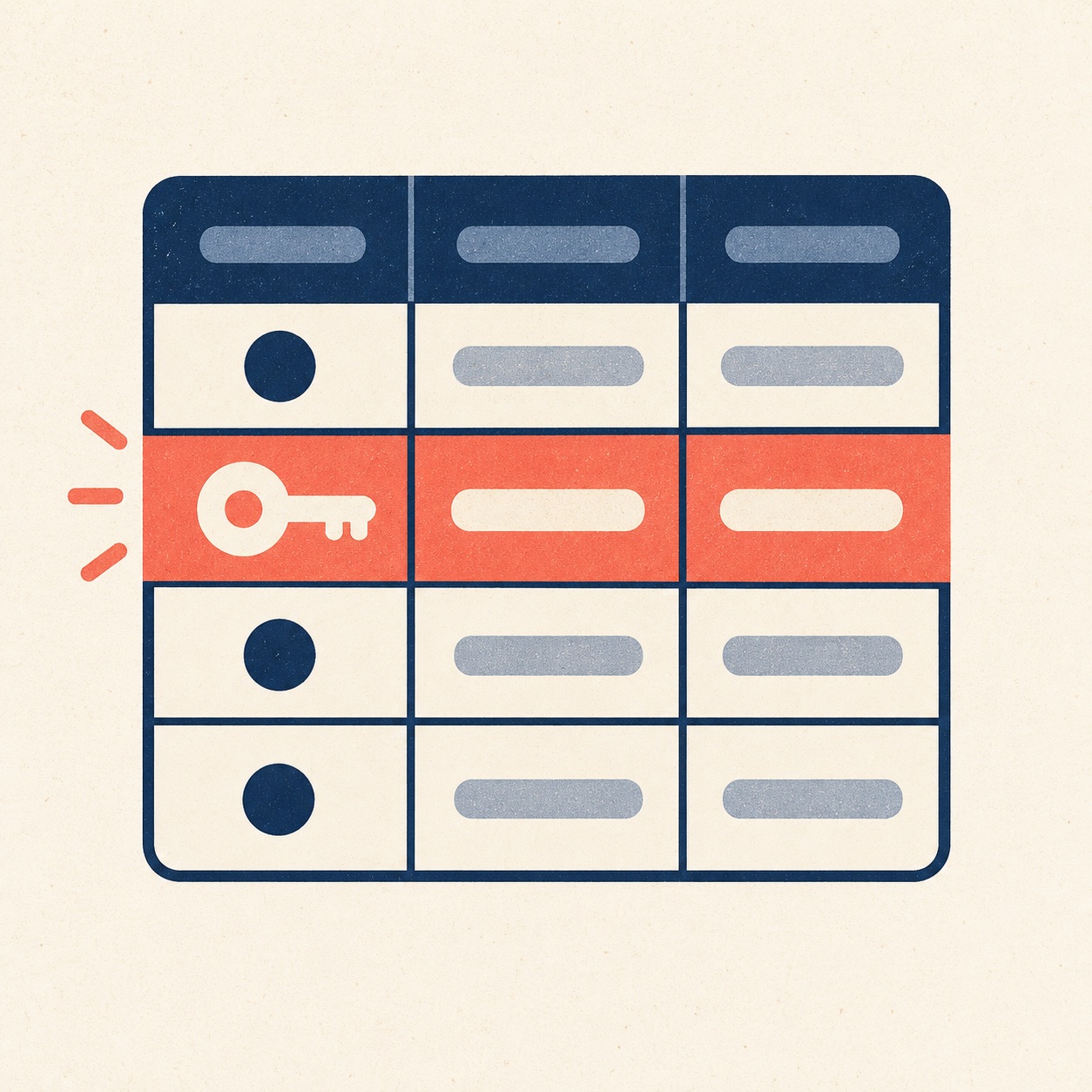
A primary key is a value, or group of values, that a database uses to identify one row in a table. For example, a customer table might give each customer a different number. That number lets the database find the right customer even if two people have the same name.
Think of it like a unique number on each library card. A primary key must identify its row without being shared by another row, and it cannot be left blank. It usually is not meant to describe the row; it is there to help the database tell records apart.